

Faux Suede vs Real Suede Jackets: Which One Should You Buy?
Both look soft. Both show the same directional color shift. Both come in the same silhouettes. But faux suede and real suede are made differently, behave differently in weather, and age differently over years of wear.
The comparison between faux suede and genuine suede comes down to four things: how each is made, how each holds up to daily use and weather, how much care each demands, and what each costs over the long run. There is no wrong answer here. The right choice depends on how you plan to wear the jacket and how much upkeep you want to give it.
How Each Material Is Made
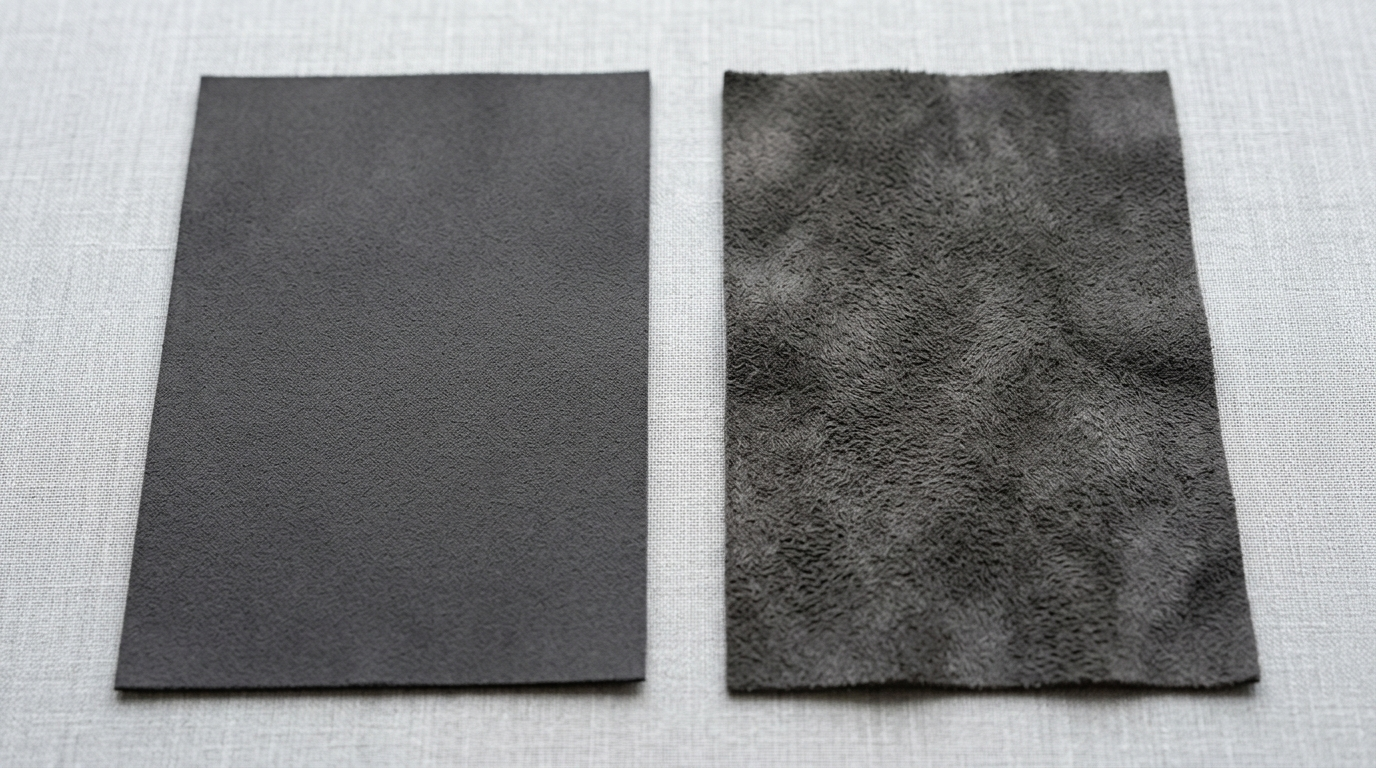
Real suede comes from the inner split of an animal hide. After tanning, the hide is split horizontally. The dense outer layer becomes grain leather. The softer inner split is buffed with abrasive wheels to raise a short napped fiber surface. The result is suede: softer and thinner than grain leather, with a distinctive matte texture and visible fiber depth.
Faux suede, also called microsuede or microfibre suede, is made from fine polyester or polyamide fibers woven into a dense fabric. The surface is split-finished, raising a short nap that mimics the texture of real suede. No animal hide is involved. The output is a consistent, uniform material at a lower production cost than genuine split leather.
Both use the same surface treatment idea: a raised nap of short fibers. The fiber source and structure differ. Real suede fibers come from collagen protein chains in animal hide. Faux suede fibers are synthetic polymer strands. This structural difference is what drives most of the performance differences between the two.
| Property | Faux Suede | Real Suede |
|---|---|---|
| Material source | Polyester or polyamide microfibre | Inner split of animal hide (lambskin, goatskin, cowhide) |
| Nap texture | Consistent, uniform | Natural variation, more organic depth |
| Water resistance | Moderate (synthetic fibers resist light moisture) | Low (leather fibers absorb water quickly) |
| Stain resistance | Higher (wipes off more easily) | Lower (stains penetrate quickly) |
| Durability | Good for 3 to 8 years with regular wear | Excellent for 10 to 25 years with proper care |
| Care frequency | Occasional brushing; spot clean as needed | Regular brushing, protector spray every 2 to 4 weeks |
| Patina development | Does not develop patina | Develops character and aging finish over years |
| Price range | Lower | Higher |
Weather and Wear: The Practical Difference
Rain and Moisture
This is where faux suede has a clear advantage. Synthetic microfibre fibers do not absorb water the way leather fibers do. A light rain shower on faux suede can often be brushed off with minimal damage. The same rain on real suede can cause water marks, fiber clumping, and temporary stiffening that requires brushing to restore. Real suede protector spray reduces this risk but does not eliminate it. For wet climates or unpredictable weather, faux suede is the lower-risk choice.
Daily Wear Resistance
Both materials show surface marks from contact, but faux suede recovers more easily. A compressed spot on faux suede often brushes back without treatment. Real suede in the same spot may need a suede eraser and careful brushing to restore the nap. Over time, the collar, cuffs, and seated areas of any suede jacket will show compression marks and darkening. This is normal wear on both materials. Faux suede handles it with less maintenance effort.
Longevity
Real suede wins on long-term lifespan. A quality real suede jacket, conditioned properly and stored correctly, can remain in good condition for fifteen or more years. Faux suede's synthetic fibers degrade over time with UV exposure and regular friction. Most quality faux suede pieces hold up well for three to eight years before the surface shows significant wear. The cost-per-year calculation often favors real suede for people who plan to keep a jacket long-term. For more on suede care, see the suede vs leather guide.
Care Requirements
Faux suede is the lower-maintenance choice. Spot clean with a damp cloth or mild soap for surface marks. Brush the nap back with a soft brush after wearing. No protector spray is required, though it provides some added protection. Store on a padded hanger in a breathable bag.
Real suede needs more regular attention. Brush after every few wears to maintain the nap direction. Apply suede protector spray every two to four weeks if you wear the jacket regularly. Use a suede eraser for dry marks before brushing. Store in a cool, dry location away from humidity above 55%. Never apply leather conditioner to real suede as it will permanently flatten the nap. For detailed real suede care, see the leather jacket care guide.
Shop Both in the Decrum Range

Men's Black Faux Suede Biker Style Jacket
Premium microfibre faux suede. Easy care. Good for everyday wear.
Shop Now
Logan Light Brown Real Suede Trucker
100% real suede. The Logan trucker. Ages well with care.
Shop Now
Women's Black Faux Suede Hooded Bomber
Faux suede hooded bomber. Water-friendly surface. No fuss.
Shop Now
Kandis Women's Brown Real Suede Car Coat
Real suede car coat. The Kandis. Built to last for years.
Shop Now


